
Concrete Repair vs. Replacement: A Roswell Homeowner's Guide
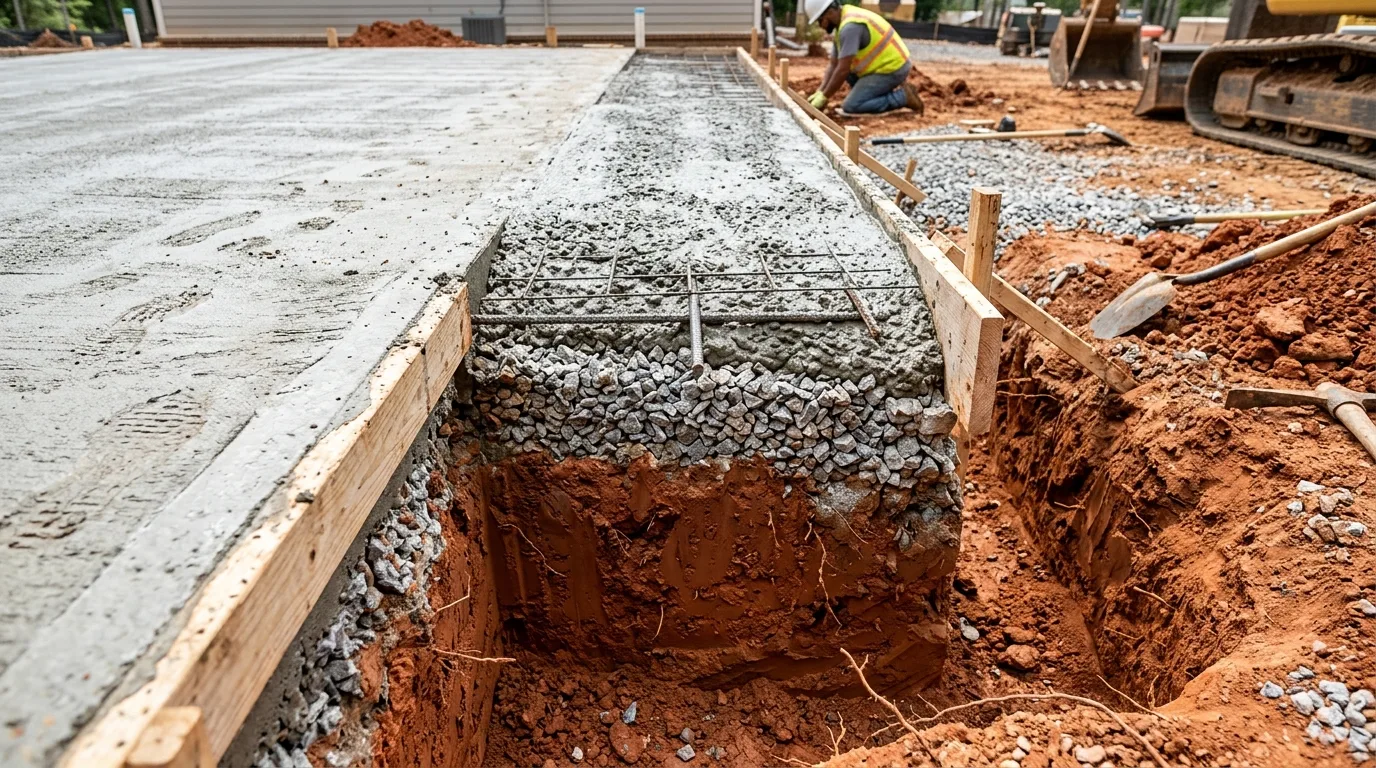
A cracked or deteriorating driveway presents Roswell homeowners with a choice that doesn’t have a universal answer: repair or replace? The decision depends on the type of damage, the underlying cause, the slab’s age, and the cost comparison over a realistic time horizon. In Georgia’s expansive red clay environment, the choice also depends on whether the root cause — drainage or sub-base failure — can be corrected as part of a repair or requires replacement to address properly. This guide gives you the framework to make the right call for your situation.
Free Honest Assessment: Repair or Replace?
We tell you which option makes more sense for your Roswell concrete — no pressure either way. Call (888) 376-0955.
When Concrete Repair Is the Right Choice in Roswell
Repair is the appropriate choice when the concrete slab itself is fundamentally sound — meaning the sub-base is intact, settlement is minor and stable, and the damage is limited to the surface or individual cracks.
Good candidates for repair:
- Cracks that are 1/4 inch or less and haven’t grown over 6–12 months
- Surface spalling confined to the top 1/4–1/2 inch of the slab (no structural impact)
- Minor discoloration or surface wear that affects appearance but not function
- One or two settled sections where mudjacking can restore grade without full replacement
- Slab that is less than 20 years old and shows limited cracking overall
Repair is also appropriate when the root cause of damage has already been corrected or is being corrected alongside the repair. A crack fill without drainage correction is a temporary fix; a crack fill accompanied by channel drain installation and downspout relocation is a substantive repair.
When Concrete Replacement Makes More Sense
Replacement becomes the better investment when the slab’s structural integrity is compromised across multiple locations, when the sub-base has failed, or when the slab is old enough that repair costs would approach replacement cost within a few years.
Good candidates for replacement:
- Widespread cracking through the full slab depth affecting 25%+ of the surface
- Multiple sections settled more than an inch — beyond mudjacking’s effective range
- Slab that has heaved repeatedly despite previous repairs, indicating ongoing sub-base instability
- Concrete older than 30 years that predates modern reinforcement standards and shows failure across multiple zones
- Drainage failure that requires excavating around the slab to correct — if you’re excavating anyway, replacement is often more economical
- Surface deterioration where repair cost would exceed 60–70% of replacement cost
In Roswell’s Georgia red clay environment, the sub-base condition is the deciding factor that repair can’t address once it has failed. A slab on a collapsed base will continue settling and cracking regardless of how well the surface is repaired. If you can hear a hollow sound when walking on the slab (indicating voids beneath), or if sections rock or flex underfoot, sub-base failure is likely, and replacement with proper base prep is the correct solution.
Cost Comparison: Repair vs. Replace in Roswell
Repair costs:
- Crack filling: $3–$7 per linear foot
- Surface resurfacing: $3–$5 per square foot
- Mudjacking/leveling: $4.79–$10 per square foot lifted
- Epoxy coating: $3.96 per square foot
Replacement costs:
- New concrete driveway: $4.92–$7.17 per square foot installed
- New concrete patio: $5.35 per square foot ($4.57–$6.13 range)
- Demo and haul-away: $1–$2 per square foot added
The 60% rule: If repair quotes total more than 60% of replacement cost for the same area, replacement is almost always the better 10-year investment — especially for slabs with active drainage problems. Repair that needs redoing in 3–5 years isn’t actually cheaper than replacement; it’s just deferred cost.
Practical Uses: Real Roswell Decision Scenarios
- 300 sq ft patio with two large settled sections and surface cracking across 30% of the area: Mudjacking the settled sections costs $1,500; resurfacing costs $900–$1,500. Replacement costs $1,371–$1,839. With widespread cracking, resurfacing won’t prevent new cracks from reflecting through the overlay. Recommendation: replace with proper drainage correction.
- 600 sq ft driveway with one 15-foot crack and minor surface spalling at the edges: Crack fill ($150) plus edge repair ($300). Total: $450. Replacement: $2,950–$4,300. Repair is clearly right if the crack is stable and drainage is functional.
- Driveway with three settled sections, hollow sound across 40% of slab, installed 1987: Sub-base has failed. Mudjacking would be temporary — the clay will continue creating voids. Replacement with modern base prep is the correct answer and the lower 10-year cost.
- 500 sq ft stamped patio, 5 years old, surface discoloration and sealer wear: Reseal ($250) and targeted crack fill ($200) — repair is the obvious choice. Stamped concrete at 5 years with only sealer wear has decades of life remaining.
Roswell Concrete: Repair or Replace — We'll Tell You Honestly
Free on-site assessment, no sales pressure. Call (888) 376-0955 or request online.
Frequently Asked Questions
How long does repaired concrete last in Roswell before it needs replacement?
A well-executed repair in Roswell, GA — one that addresses the root cause alongside the surface work — typically extends the slab’s service life 5–15 years depending on the repair type and slab condition. Crack fills on otherwise sound slabs can last 10+ years. Resurfacing overlays on sound slabs with corrected drainage last 8–12 years. Mudjacking on slabs with stable sub-grades holds 7–12 years. The variable is always whether the drainage issue causing the original damage was also corrected.
Can you repair stamped concrete in Roswell without it showing?
Color-matched repair of stamped concrete is difficult because cured concrete changes color over time — new repair material rarely blends with weathered surrounding concrete. For stamped surfaces, preventing cracks through proper base prep and control joint placement is far more important than repair options. When repair is necessary, we use color hardener and texture tools to approximate the surrounding finish, but we’re transparent with homeowners that the repair will be visible on close inspection.
What should I ask a contractor before choosing repair over replacement?
The five questions that reveal whether a contractor is giving you honest guidance: (1) What is causing the damage? (2) Will the repair address that cause, or only the symptom? (3) What is the expected lifespan of the repair? (4) At what point would you recommend replacement instead? (5) Can I see the sub-base before you decide? A contractor who recommends repair without diagnosing the cause — and without committing to a repair lifespan — isn’t providing a meaningful recommendation.
Repair or Replace — We Help You Decide Honestly
Call Roswell Concrete Contractor at (888) 376-0955 for a free assessment. No upselling, just straight answers.
Related: