
Best Time of Year for Concrete Work in Roswell, GA
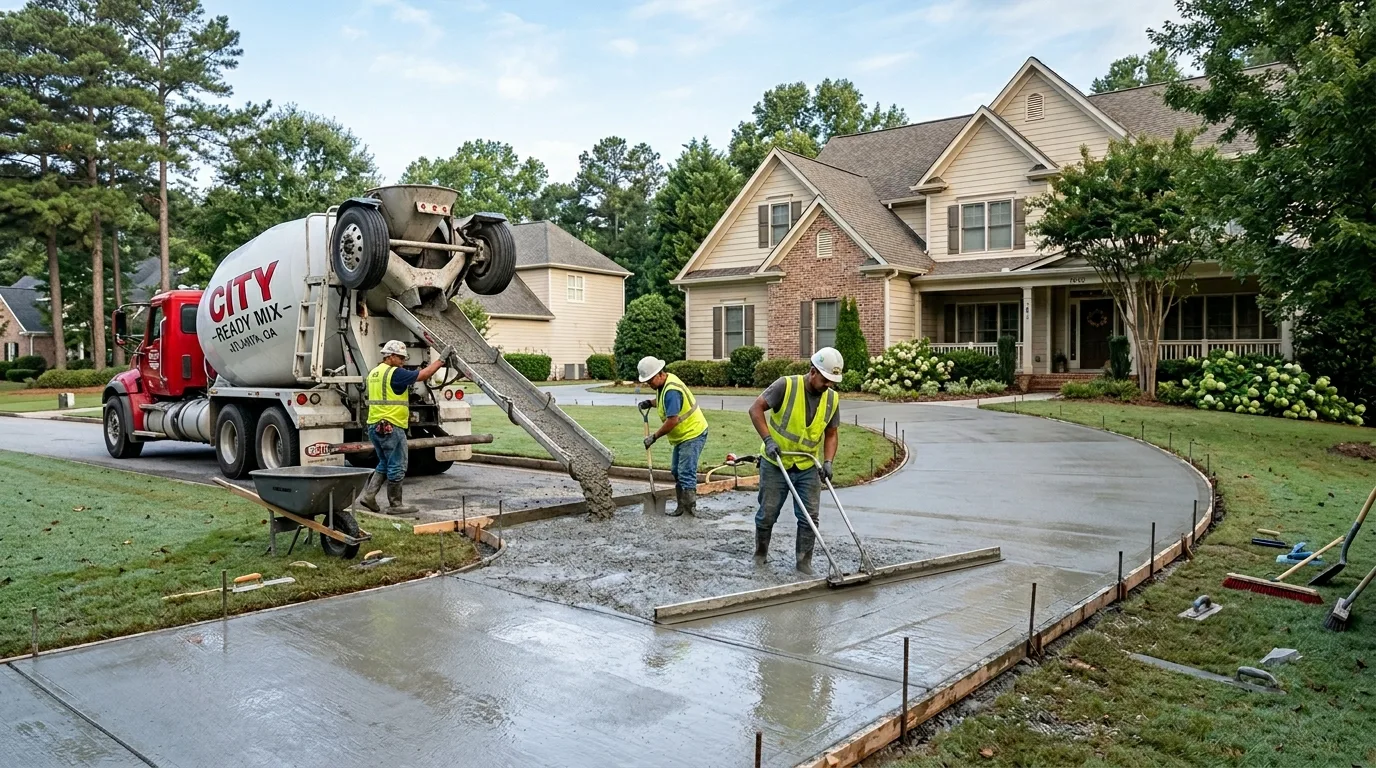
Timing a concrete project in Roswell, GA isn’t just about contractor availability — it’s about giving your concrete the best possible curing environment. Georgia’s humid subtropical climate means Roswell experiences hot, stormy summers, mild winters with occasional freeze risk, and two excellent windows of moderate temperatures in spring and fall. Choosing the right season reduces the risk of plastic shrinkage cracking, freeze damage, and heat-accelerated curing that shortens concrete lifespan. This guide helps you understand each season’s tradeoffs and when to book your project.
Schedule Your Roswell Concrete Project
We work year-round with seasonal protocols for every condition. Call (888) 376-0955 to discuss timing.
Why Timing Matters for Concrete in Roswell
Concrete’s strength development depends on a controlled hydration process. When water in the concrete mix reacts with cement (hydration), the material gains compressive strength over 28 days. The speed and quality of this reaction is temperature-dependent:
- Too cold (below 40°F): Hydration slows dramatically and fresh concrete can freeze before reaching 500 PSI — causing permanent structural damage as ice crystals disrupt the cement matrix.
- Too hot (above 90°F): Hydration accelerates and water evaporates from the surface faster than the concrete gains strength. Rapid moisture loss causes plastic shrinkage cracks — the fine surface cracks that appear before the concrete is even hard.
- Ideal range (50–80°F): Controlled, even curing that develops maximum strength and surface integrity.
In Roswell’s Georgia climate, this means two natural windows of ideal conditions and two seasons that require active management.
Season-by-Season Guide for Roswell Concrete
Spring (March–May): Prime Season — High Demand
Spring is Roswell’s best concrete season. Temperatures in the 55–78°F range, moderate humidity, and decreasing afternoon storm frequency after mid-April give concrete ideal curing conditions. The clay sub-grade is stable — not freshly frozen from winter, not yet at peak summer moisture.
Demand is highest in April and May, which means contractor availability is tightest and lead times are longest. If you’re planning a spring project — driveway, patio, retaining wall — call in January or February to get on the schedule. The homeowners who book in late March and ask for April start dates often find themselves waiting into June.
Watch for: late-March cold snaps that can bring sub-40°F nights; we monitor forecasts and adjust scheduling when late-season cold threatens fresh pours.
Summer (June–August): Workable With Protocols
Roswell summers are hot and stormy. Average highs reach 89°F in July, and afternoon thunderstorms between 2pm and 6pm are common from late June through August. Fresh concrete can’t get rained on in the first few hours after pouring, and heat accelerates moisture evaporation from the surface — creating plastic shrinkage crack risk.
We work in summer with specific adjustments: early-morning pours (6am–9am) to get the concrete placed and worked before peak heat, wet curing blankets to retain surface moisture during the critical first 24 hours, and retarder admixtures for large pours that need extended workability. The risk isn’t unsurmountable — but summer concrete requires more management than spring or fall pours. Pool decks, covered patio areas, and shaded driveways are good summer candidates because the shade reduces surface evaporation.
Demand is actually lower in July and August than in spring or fall — if you have flexibility, summer scheduling often means shorter wait times and sometimes better contractor availability.
Fall (September–October): Second Peak Season
Fall is Roswell’s second ideal concrete window. Temperatures drop back into the 65–80°F range, humidity decreases meaningfully from summer peaks, and afternoon thunderstorm frequency declines significantly. Georgia red clay soil begins transitioning from summer moisture saturation to fall drying — a transition that reduces sub-base moisture content and stabilizes sub-grade conditions.
September and October are excellent months for both flatwork and structural concrete in Roswell. Stamped concrete in particular benefits from fall’s more predictable workability window — the lower ambient temperature gives crews more time to stamp before the surface stiffens. Fall demand runs close to spring demand, so booking in August for September–October work is recommended.
Winter (November–February): Lower Risk Than Many Assume, With Caveats
Roswell’s winters are mild compared to much of the country. The average January low is 33°F, and extended sub-freezing periods are uncommon. The realistic risk window is December through February, when overnight lows occasionally reach the upper 20s for a day or two at a time.
The key rule for winter concrete in Roswell: fresh concrete must be protected from temperatures below 32°F for the first 48–72 hours after placement — the time before it reaches 500 PSI. We use insulating curing blankets on winter pours and monitor forecasts closely. We avoid scheduling pours when overnight lows are forecast below 25°F within 48 hours.
The upside of winter projects: booking is easy, lead times are shortest, and some homeowners use the slower season to get their spring project on the books and executed before the spring rush.
Practical Uses: Seasonal Timing by Project Type
- Concrete driveway replacement in Roswell: Best April–June or September–October. Book 6–8 weeks in advance for prime spring and fall slots.
- Stamped concrete patio: Best April–May or September–October — workability window is most predictable in moderate temperatures.
- Retaining wall installation: Best August–November — drier soil makes excavation cleaner and drainage installation more accurate.
- Foundation repair: Can be assessed and planned any time; repair execution best in moderate temperatures (above 45°F ambient).
- Concrete pool deck: Spring or early fall best for new installation; resurfacing can be done year-round in non-freezing conditions.
Ready to Book Your Roswell Concrete Project?
We'll advise on timing for your specific project. Call (888) 376-0955 — early booking gets the best schedule.
Frequently Asked Questions
What’s the minimum temperature for pouring concrete in Roswell?
Fresh concrete should not be placed when the ambient temperature is below 40°F or forecast to drop below 32°F within 48 hours of placement without insulated curing protection. We use insulating blankets on winter pours when overnight lows are forecast between 25–40°F. We avoid scheduling pours when sustained temperatures below 25°F are forecast — at that temperature, curing blankets alone can’t prevent freezing in fresh concrete.
Can concrete be poured in the rain in Roswell?
No. Rain on fresh concrete within the first 2–4 hours after placement washes out cement paste from the surface, weakens the surface layer, and can cause pitting and surface defects. We monitor radar during every pour and schedule around forecast precipitation. If unexpected rain arrives during a pour, we protect the fresh surface with plastic sheeting until the rain passes. This is one reason summer afternoon pours are scheduled for early morning — most of Roswell’s summer storms arrive between 2pm and 6pm.
Is winter concrete as strong as spring or fall concrete?
Yes, if properly placed and cured. Concrete that is protected from freezing during its initial cure period reaches equivalent long-term strength regardless of the season it was poured. The key is maintaining the fresh concrete above 50°F for the first 7 days — achievable in Roswell’s mild winters with insulating blankets. The concrete specification doesn’t change by season; only the curing management changes. See our Georgia red clay guide for how soil conditions by season affect project timing as well.
Year-Round Concrete in Roswell — Done Right
We know when to pour and how to cure in every season. Call Roswell Concrete Contractor at (888) 376-0955.
Related: